


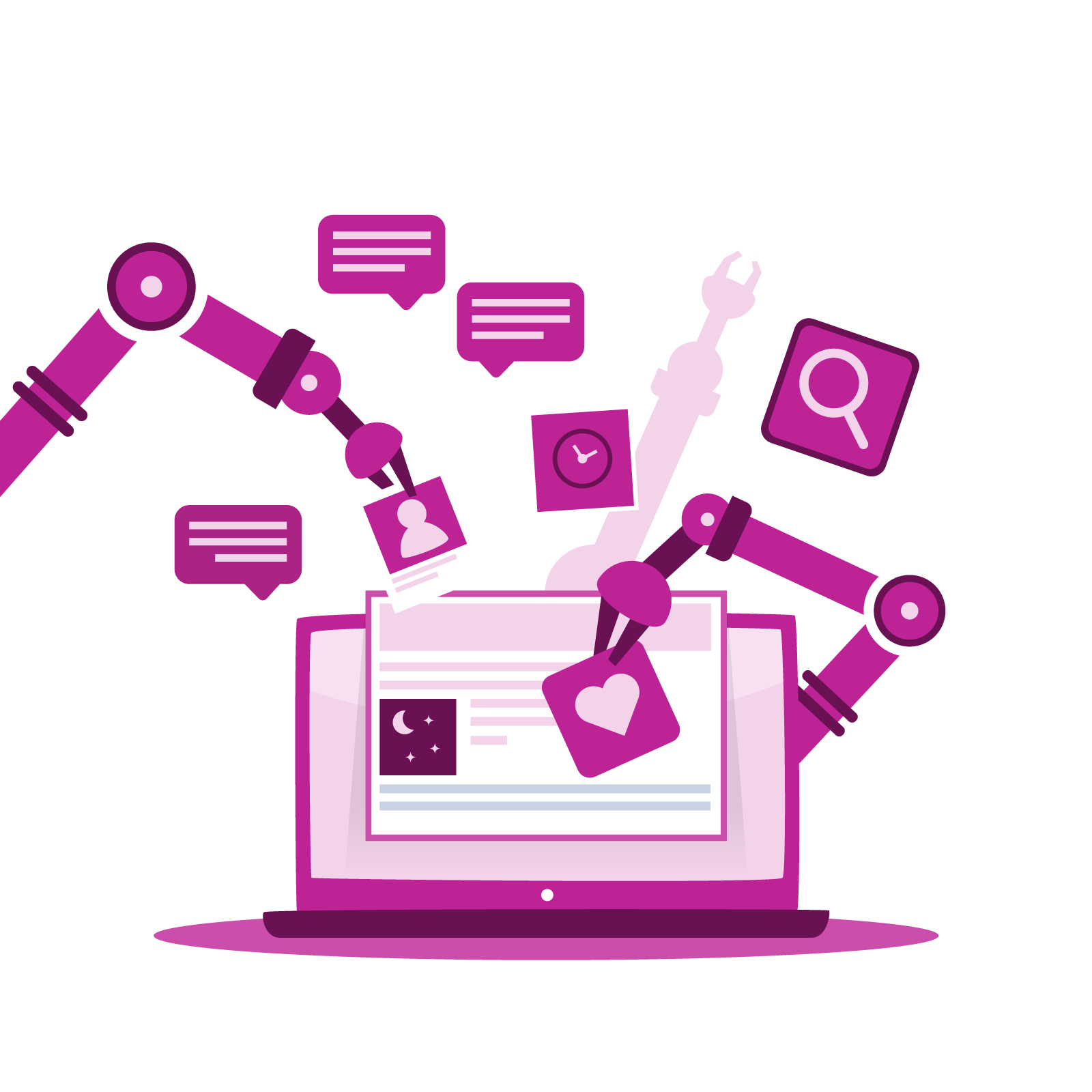
Paid search has its own targets. Paid social has its own reporting. CRM has its own roadmap. CRO sits somewhere else. Creative is often briefed separately. Analytics is expected to make sense of everything after the fact.
Each team is working. Each channel may even be improving. But the system is fragmented. And that creates a problem. Because customers do not experience brands in channels, they experience one journey.
A customer might discover a product through Meta, search for the brand on Google a day later, browse a product page, leave without buying, receive an email, click a retargeting ad, and finally convert through branded search. Which channel deserves the credit? More importantly: which part of that journey should be improved? That is the question connected growth systems are designed to answer.
The Problem With Channel-by-Channel Optimisation
Traditional performance marketing is often built around individual channel efficiency. Reduce CPA in paid social. Increase ROAS in Google Ads. Improve email revenue. Increase conversion rate. Grow organic traffic. All of those things matter.
The problem comes when they are treated as separate objectives. A paid media team can improve reported ROAS by concentrating budget around existing demand. A CRM team can increase email revenue by sending more campaigns. A CRO team can improve conversion rate by focusing heavily on high-intent users.
Individually, the numbers may look better. But that does not necessarily mean the business is creating more demand, acquiring more valuable customers or growing more profitably. Local optimisation can produce global underperformance. That is why channel performance should increasingly be viewed as part of a wider growth system.
What Is a Connected Growth System?
A connected growth system brings acquisition, conversion, retention, creative and data into one operating model. Instead of asking: "How do we improve Meta?" You ask: "How do we acquire more of the right customers?" Instead of: "How do we increase Klaviyo revenue?" You ask: "How do we increase customer value after acquisition?" Instead of: "What creative should we make next?" You ask: "What has the customer already told us through performance data?"
The distinction is important. Channels become components of the system rather than the system itself. A simple connected growth model can be structured around five stages: Acquire → Convert → Retain → Learn → Reinvest. Each stage should make the next one stronger.
1. Acquire
Acquisition is where most performance marketing programmes begin. Google Ads. Meta. TikTok. Shopping. Affiliates. Demand generation. In a connected growth system, the question goes further. Which customers should we acquire? Which products should we prioritise? Which propositions generate the strongest downstream value? Which acquisition sources produce customers who buy again? Which creative attracts high-quality traffic rather than simply cheap clicks?
2. Convert
Traffic is expensive. Conversion determines how much value you extract from it. But conversion rate optimisation should not operate separately from acquisition. Paid media and CRO should therefore operate as a feedback loop. Acquisition tells you what creates interest. Conversion tells you whether the promise survives contact with the website.
3. Retain
The first transaction should not be the end of the performance marketing journey. Email and SMS can increase repeat purchase rate. Post-purchase journeys can introduce complementary products. Retention data should also flow back into acquisition. If customers who purchase Product A are twice as likely to make a second purchase, that matters for media strategy. Retention is not simply a CRM responsibility. It is part of the acquisition model.
4. Learn
This is where connected growth starts to compound. Every part of the system generates information. Paid search tells you what people are actively looking for. Paid social tells you what messages create attention. CRM tells you what existing customers buy next. A connected system creates a mechanism for bringing those signals together. That creates a more complete view of the customer.
5. Reinvest
The final stage is where the learning gets turned back into growth. Investment should follow evidence. If one proposition is consistently outperforming, build more creative around it. If one customer segment has higher lifetime value, increase acquisition investment against it. That is what turns performance marketing from campaign management into a growth engine.
Creative Is the Connective Tissue
Creative deserves particular attention because it sits across almost every stage. It influences acquisition. It shapes the proposition. It can reveal customer objections. Historically, creative was often treated as an input. The media team requested assets. The creative team supplied them. The campaign launched. That model is becoming increasingly outdated. Creative performance data should influence what gets produced next. Creative becomes part of the information system. Not simply a production function.
AI Makes Connected Growth Systems More Practical
The difference today is that AI makes it much easier to act on marketing data at scale. AI can help analyse large volumes of creative performance. It can identify patterns across search queries. It can generate new creative variations around winning concepts. AI can increase that velocity. But only if the underlying system is connected. Automating fragmented marketing simply makes fragmentation faster.
The KPI Problem
Connected growth also requires a different approach to measurement. If every team is optimised around its own KPI, behaviour naturally follows. These measures need to sit underneath broader commercial metrics, which might include:
- New customer revenue
- Contribution margin
- Customer acquisition cost
- Repeat purchase rate
- Customer lifetime value
- Payback period
- Blended marketing efficiency
- Incremental revenue
The business is no longer asking each team to win independently. It is asking the system to win.
Your Paid Media Problem Might Not Be a Paid Media Problem
This is one of the biggest benefits of looking at growth as a connected system. It changes how problems are diagnosed. If Meta performance drops, the immediate reaction might be to change targeting or creative. But perhaps conversion rate has fallen. Perhaps the strongest-selling product is out of stock. Connected systems make it easier to find the real constraint.
From Channel Management To Growth Management
This requires agencies and internal teams to work differently. Specialists still matter. Paid search needs expertise. CRM needs expertise. Creative needs expertise. CRO needs expertise. The answer is not to remove specialisation. It is to connect it. The paid social team should know what is happening in CRM. The CRM team should know which acquisition propositions are winning.
The creative team should understand conversion data. The CRO team should see search and social insights. Strategy should sit across the customer journey rather than above individual channels. That creates a different operating model. One where information travels faster. And where every specialist is contributing to the same commercial objective.
The Next Stage Of Performance Marketing
For years, performance marketing was largely about gaining an advantage inside advertising platforms. Better bidding. Better account structure. Better targeting. Better optimisation. Those things still matter. But platforms are automating more of them. The bigger advantage is increasingly moving outside the ad account. The quality of the creative. The strength of the proposition. The conversion experience. The first-party customer data. The retention strategy. And, crucially, the connections between them.
The brands that outperform will not necessarily be the ones with the most channels. They will be the ones where each part of the marketing system makes the others smarter. Because the future of performance marketing is not better channel management. It is better connectivity between the systems that create, convert and retain demand.
Need a Fresh Perspective? Let’s Talk.
At 360 OM, we specialise in helping businesses take their marketing efforts to the next level. Our team stays on top of industry trends, uses data-informed decisions to maximise your ROI, and provides full transparency through comprehensive reports.




.png)


